When a vehicle is damaged, insurance companies need to quickly assess the situation: How severe is the damage? Should the car be repaired or written off? What will it cost? Traditionally, this requires manual inspection by assessors – a process that takes time and resources.
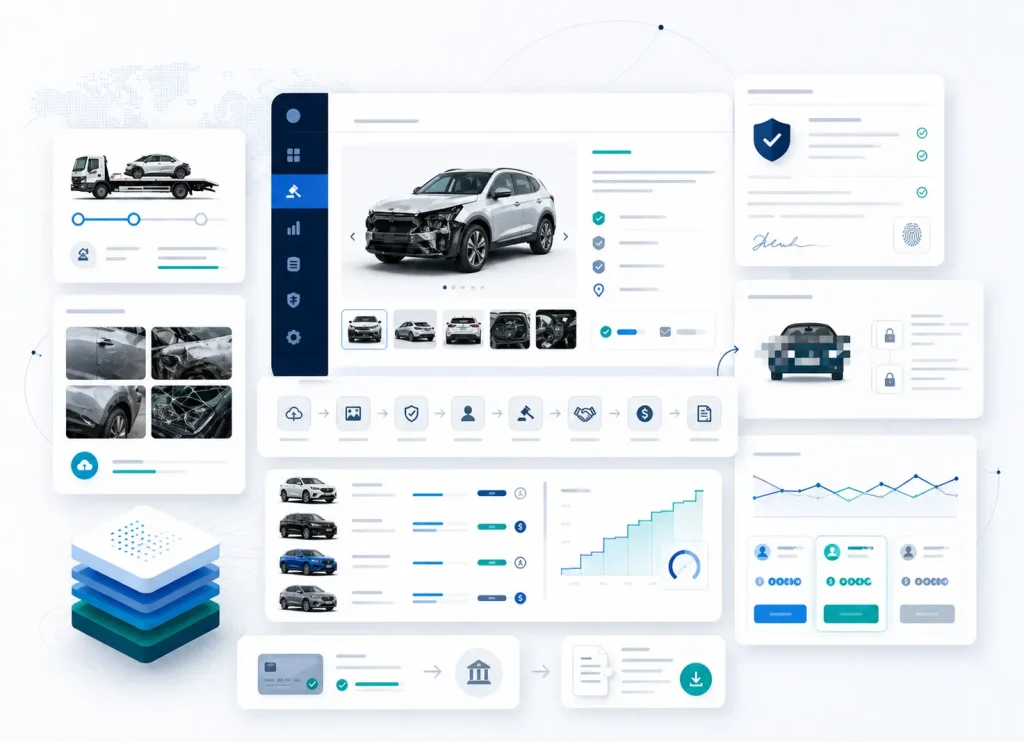
We built a First Notice of Loss (FNOL) platform that streamlines the entire claims intake process and uses AI to provide instant damage assessments from photos. The system helps insurers make faster, data-driven decisions while reducing operational costs.
The Challenge
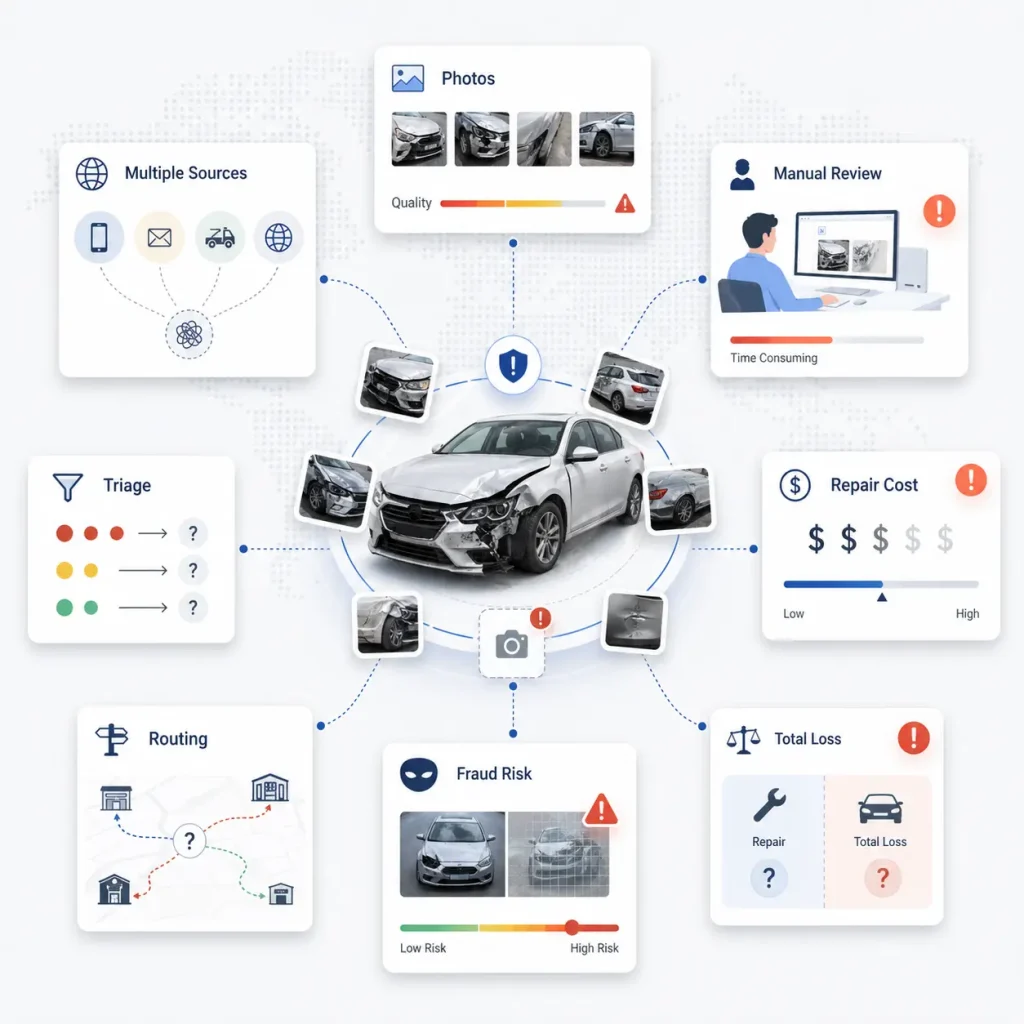
Insurance companies faced several bottlenecks in their claims process:
- Slow claims intake – gathering damage information and photos from policyholders was fragmented and time-consuming
- Photo acquisition difficulties – images came from multiple sources (customers, towing companies, adjusters) with no unified workflow
- Manual assessment delays – every claim required human review before routing to the appropriate department
- Inconsistent triage decisions – repair vs. total loss determinations varied between assessors
- Cost estimation uncertainty – accurate repair cost estimates required expert involvement early in the process
- Resource intensive – skilled assessors spent time on straightforward cases that could be automated
What We Did
We designed and built a comprehensive FNOL and AI triage platform with multiple integrated components:
Claims Intake System
Flexible FNOL form capturing:
- Damage type and circumstances
- Injury claims and additional costs (storage, towing)
- Accident location and third-party involvement
- Routing rules to appropriate insurance department
Multi-Channel Photo Acquisition
Three methods for obtaining damage photos:
- Self-Service Claims Portal – shareable link sent to policyholders where they submit registration number, insurer, claim details, location, description, and damage photos
- System Search – lookup by registration to find existing photos (e.g., already uploaded by roadside assistance or recovery partners through dedicated interface)
- Manual Upload – direct photo upload by claims handlers
AI Damage Assessment Engine
Proprietary AI combined with third-party integrations:
- Visual damage detection – AI identifies and highlights damaged areas on photos
- Parts identification – determines which specific components are affected
- Vehicle diagram mapping – displays damage locations on standardized vehicle schematic
- Severity classification – rates damage level (none, minor, moderate, severe, critical)
- Decision recommendation – repairable, total loss, or requires manual inspection
- Repair estimation – estimated labor hours and parts list (repair vs. replacement)
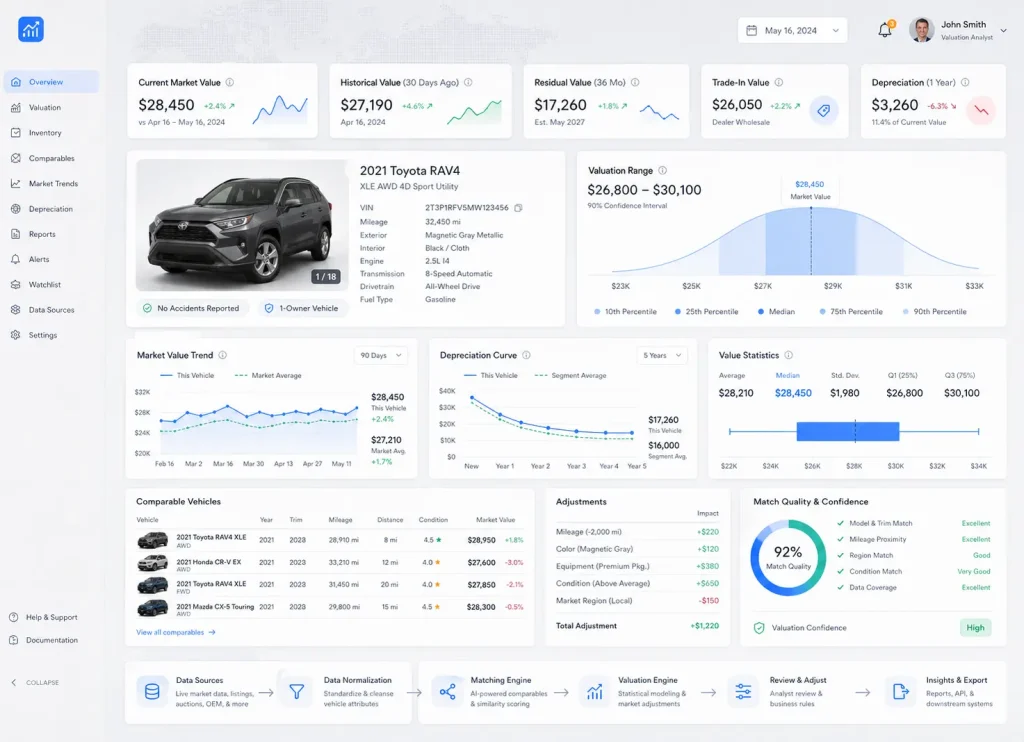
- Cost calculation – using pre-accident valuation (PAV), damage severity, salvage value, and repair cost estimation
Automated Reporting & Routing
- Generated reports delivered to appropriate insurance department
- Structured data for downstream claims processing
- Full audit trail of AI decisions and confidence levels

The Results
- Instant damage assessment - AI analysis completed in seconds, not days
- Multiple photo sources unified - customer submissions, towing companies, and manual uploads in one workflow
- Automated triage decisions - repair vs. total loss recommendations with supporting data
- Repair cost estimates - early visibility into potential claim costs
- Reduced assessor workload - routine cases handled automatically, experts focus on complex claims
- Consistent decision-making - AI applies same criteria to every claim
- Faster claims processing - from notification to department routing in minutes
- Integrated ecosystem - connects with valuation, salvage, and repair cost systems
Technologies Used
Let's Start the Conversation
Tell us about your challenge. We’ll share relevant experience and outline a practical path forward.